
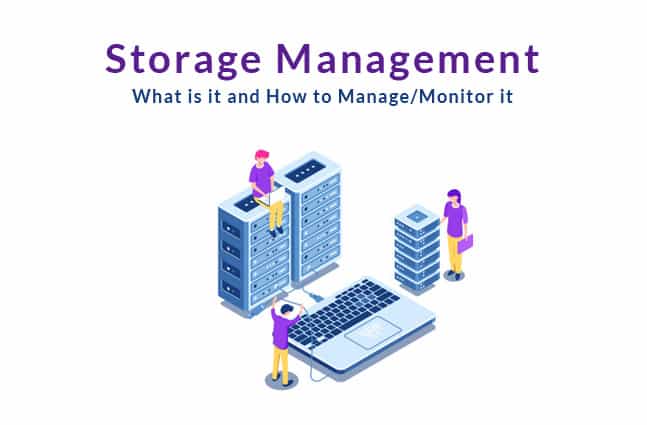
Data is one of the most important assets for any organization and this is why there is a lot of emphasis on the way it is stored and handled.
In addition, storage management techniques are critical to the security of an organization, especially given the many security breaches that are plaguing the digital world today.
These reasons explain the astounding growth rate of storage management. In fact, it is estimated that the need for data storage is growing by 40% a year and 79% of the IT professionals surveyed point out storage management as one of the challenges for their organization.
Since this storage management is so critical, let’s understand what it is really and how you can implement it in your organization.
What is Storage Management?

Storage management is an umbrella term that includes all the technologies, processes, and strategies that organizations use to maximize the performance of their data storage resources.
As you can see, this term encompasses a wide range of aspects such as virtualization, security, provisioning, automation, redundancy, fault tolerance, and more.
Storage management is complex because it takes into account a ton of different factors.
In addition, increasing the storage capacity is an expensive investment for companies, so there is a good amount of capacity planning and forward-thinking involved in it as well, especially considering the rate at which data is growing.
Why do Companies Need Storage Management?

Why do companies need storage management in the first place, considering that it is complex and expensive? The simple answer – it is a necessity to handle today’s growing data volumes.
Besides, storage management also offers many benefits for organizations, provided it is implemented well. Some of the benefits that come with storage management are:
- Allows companies to better utilize their existing storage capacity
- Reduces the cost for companies. This includes both the capital costs as well as the operating costs associated with the maintenance of these devices.
- Simplifies the process of storage and maintenance.
- Saves time, effort, and money.
- Improves the performance of data centers.
- Helps an organization to improve its overall agility.
- Makes it easy to reassign storage capacity quickly as the needs of a business change.
- Speeds up the process of assigning storage resources to applications.
Due to these multitudes of benefits, storage management is an integral part of every organization.
Implementation
Since storage management is such a broad category, it is not possible to write down a defined set of steps for its implementation.
Generally speaking, implementation will depend on the technology, software, and the underlying hardware of a system.
Some of the broad aspects of storage management implementation are:
- It can be deployed as software or it can be included in the hardware, depending on the requirements of your organization.
- It can be applied to any device – primary, secondary, and even archived storage.
- Skills and training are an important part of its implementation.
- Storage Networking Industry Association (SNIA) is an important organization that has established standards for the implementation of storage management.
- Storage Management Initiative Specification (SMI-S) defines the attributes of storage hardware and lays the foundation for resolving software-related problems.
Tools
The management of storage systems can get complicated in distributed systems. Storage fabrics that are not contiguous with devices that aren’t clustered can be impossible to coordinate with just the native management consoles provided with SAN packages.
In these instances, third-party tools become essential. Systems that can take a multi-site view can assist centralized IT departments and MSPs to manage many storage locations.
ManageEngine RMM Central – FREE TRIAL
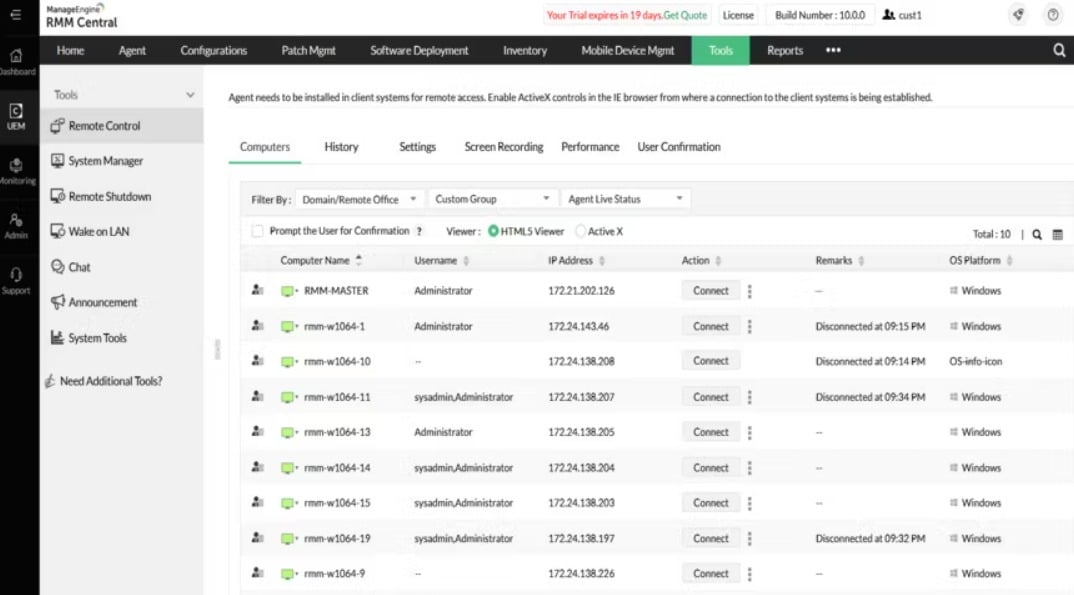
RMM Central is a versatile remote monitoring and management platform, notable for its comprehensive storage management capabilities, providing a robust solution for IT administrators. The tool’s ability to provide detailed analytics on storage utilization and trends helps IT professionals make informed decisions regarding capacity planning and data allocation. RMM Central’s integration capabilities also mean it can seamlessly work alongside other IT management tools, enhancing its utility in diverse IT environments.
Why do we recommend it?
RMM Central stands out for its extensive storage management features, which allow for proactive monitoring and management of storage devices and networked storage areas. The platform excels in its ability to perform automated disk monitoring, predict storage failures, and efficiently manage disk space across multiple devices. This ensures that critical data is safeguarded and storage resources are optimized, preventing downtime and performance bottlenecks.
Who is it recommended for?
RMM Central is highly recommended for IT managers and system administrators who require a detailed and efficient approach to managing storage within large networks. It is particularly useful in environments with extensive data storage needs, such as data centers or enterprises with large digital footprints. The platform’s comprehensive set of features makes it ideal for those who need to maintain high levels of data availability and integrity while managing complex storage solutions.
ManageEngine OpManager – FREE TRIAL
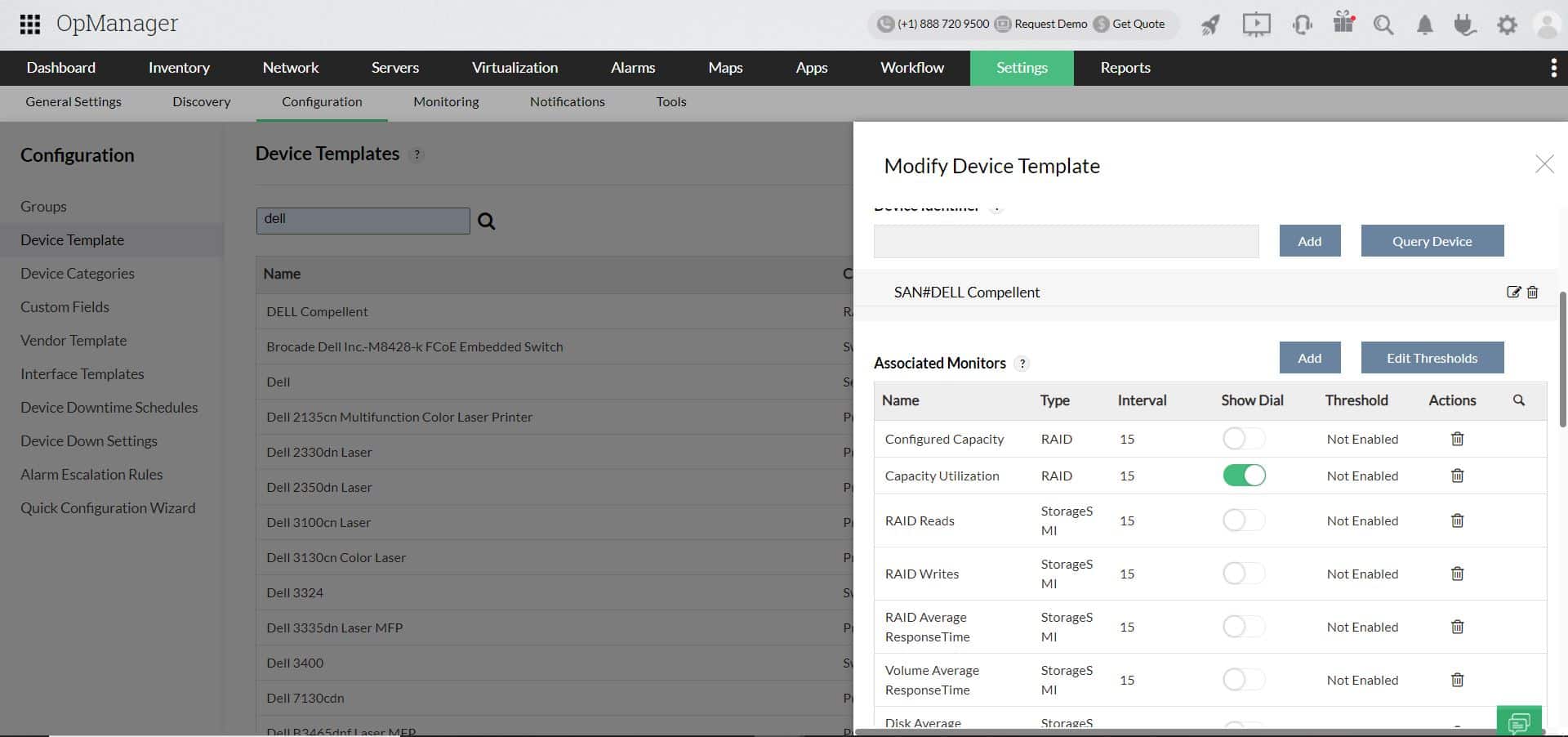
ManageEngine OpManager is another reliable tool for monitoring the storage and other devices in your network. A highlight of ManageEngine OpManager is its proactive approach to monitoring multiple storage devices. It comes with monitoring templates for 30+ vendors, and these can be customized to meet your specific needs. Using these templates, you can also create your flexible storage monitoring.
Why do we recommend it?
We recommend ManageEngine OpManager, as it provides a unified view of all your storage devices. It compares the metrics against established thresholds, and sends alerts in case of deviations. One standout feature for us is the option to push bulk configurations across multiple devices, especially for making automatic updates and maintaining consistency across your storage environment.
Who is it recommended for?
It is recommended for organizations with extensive storage requirements. It can also help IT administrators to have a holistic view of all the storage devices in their network.
Download a 30-day free trial.
Conclusion
In short, storage management is an essential part of an organization as it provides many benefits related to data handling and management.
Though the implementation may vary based on the specific software, hardware, vendor, and scenario, following the best practices laid down by organizations such as SNIA can make it easy for organizations to tap into its benefits.